Every time I walk into my local supermarket, which happens to be one of the largest in the UK, I am struck by a feeling that I’m stepping into a treasure vault of modern day miracles. Of course, most days I don’t consciously feel wealthy as I visit the shops for a milk top-up, baked treat or last-minute asparagus side dish. It all feels routine, often mundane. But now and then, I pause in the middle of a clinically lit aisle, surrounded by towering shelves of produce from all over the world, and I realise: this is what unimaginable wealth looks like.
Not wealth in the sense of bitcoins or Ferrari’s, but wealth as abundance – an incredible, historically unprecedented abundance that we’ve normalised in daily life. The supermarket, in its ordinary bustle, represents the greatest yet least appreciated form of wealth in modern society.

Walking through those automatic doors, I’m greeted by fruits that my ancestors centuries ago might never have seen in their lifetime, let alone all at once. I stroll past crates of bread, dozens of different freshly baked loaves filling the air with a warm aroma. A few steps further, I see an entire wall of cereal boxes, a hundred varieties catering to every taste and diet. There’s aisles of beer, wines and spirits, which were previously reserved for royalty and upper classes. The store is climate-controlled, brightly lit by steady electric light. It’s such a normal errand that it’s easy to not marvel at it. But when I do think about it, the sheer ease and variety on display leaves me awe-struck.
The life we consider “normal” would be utterly astonishing to people living 150 ago. The contrast in how much effort it took in the past to obtain basic goods versus how easy it is now cannot be overstated. I often try to imagine what a time traveler from 1700 or 1800 would feel if I brought them to my supermarker. For most of human history, daily existence was defined by scarcity and toil. Keeping your family fed, clothed, and warm required constant work and careful planning. Food wasn’t something you’d expect to have in dozens of varieties year-round; it was something you grew or bartered for, stored for winter, and hoped wouldn’t run out before the next harvest.
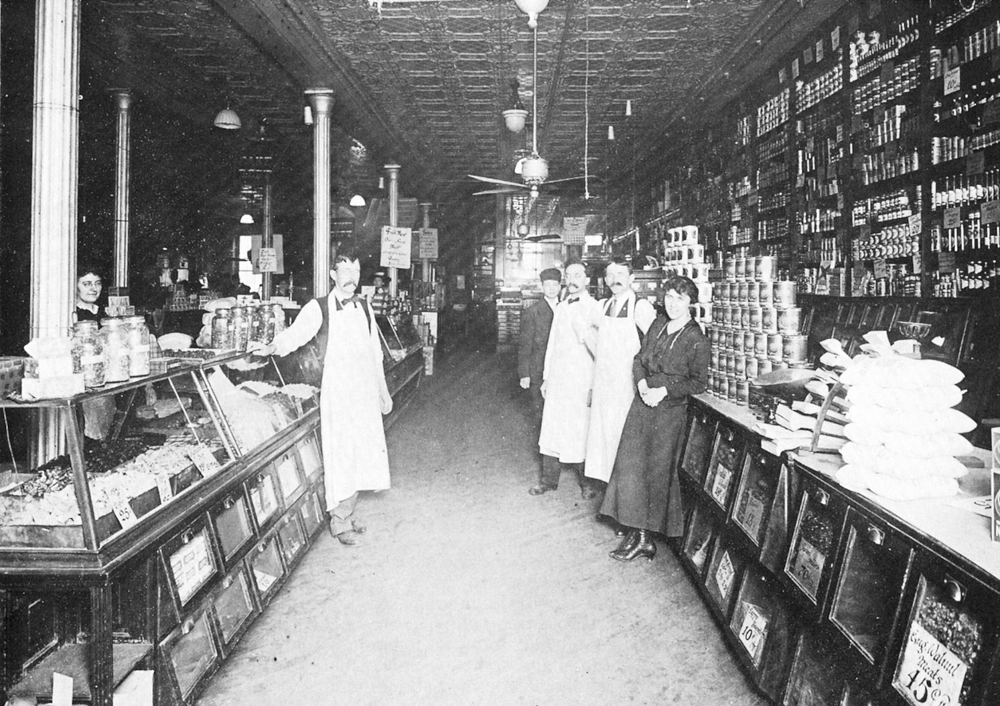
To really appreciate how far we’ve come, consider a few then-and-now comparisons that highlight this shift:
- Food Variety and Availability: A couple of centuries ago, your diet was limited to what was locally grown or produced. A medieval serf or even a 18th-century farmer ate coarse bread, some root vegetables, maybe occasional meat, and that was about it. Exotic spices or fruits (like a pineapple or cinnamon) were literal treasures, rarer than gold, often reserved for royalty. Fast forward to today – even a budget supermarket has more variety than the grandest royal feast of old. I can buy strawberries in December, shipped from the opposite hemisphere. I can choose rice or pasta or quinoa; chicken or tofu or lentils; spices from India, coffee from Colombia, olive oil from Italy. The average supermarket carries tens of thousands of different items in one place.
- Work and Time: Imagine being a peasant in the 1700s – you spend all year plowing, sowing, reaping, and still worry if the harvest will be enough. Perhaps you labor daily just to churn butter, bake bread, salt meats, and preserve what you can for winter. In contrast, I, or any modern person, can work a few hours at my job (whether a teacher, engineer, barista, anything) and with a fraction of a day’s wages fill a cart with a week’s worth of food. It might take me 30 minutes in the store versus months of backbreaking work for the peasant. That time and labor freedom is an incredible wealth we forget we have. I don’t have to grow my own wheat, grind my flour, or cure my meat – it’s all waiting for me neatly packaged. This convenience was unimaginable in the past.
- Security and Abundance: In the past, if droughts hit, communities faced famine and possibly extinction. Food insecurity was a constant spectre. Today, thanks to global trade and robust supply chains, a bad harvest in one region is barely felt by consumers elsewhere. The supermarket’s shelves stay full through storms and droughts by drawing on a global network of producers. That peace of mind – not worrying that my family will go hungry because of one bad season – is an enormous form of wealth.
Thinking about these differences fills me with gratitude and frankly awe. We live in a time of bounty that earlier generations, even the richest of them, could hardly imagine. Author Benjamin Lorr aptly described the modern supermarket as “a miracle” that offers “a continuous, dreamlike bounty of products” seemingly without effort.
What makes this system even more fascinating is how invisible its complexity and wealth have become to us. We are so used to convenience that we only really notice when something is missing. The COVID-19 pandemic lives in recent memory. The global dance of trade, transportation, and market competition that fills the supermarket operates quietly in the background of our lives. Farmers in distant countries plant crops talking in languages and dialects we will never hear, factories churn out goods and far away lands, trucks and ships and trains move everything around the globe. All that so that, for a few quid, I can pick almost any ingredient or household item I want. It’s the result of centuries of innovation in agriculture, trade, and economics. In a subtle way, the principles of global trade and free-market enterprise have woven together this cornucopia – oranges from Spain meet salmon from Norway and rice from India, all in one place, because it makes economic sense to trade and stock whatever consumers desire. It’s fair to say that the freedom to trade and the incentives of a market system helped enable this breadth of choice.
Yet for all its magnificence, the supermarket is massively under-appreciated. We don’t typically gush about how lucky we are to have supermarkets – but maybe we should, at least once in a while. We reserve the word “wealth” for mansions or yachts, but real wealth is also having full fridges and cupboards and options to feed your family nutritiously, affordably, and with delight. Real wealth is living without the constant fear of want. By that measure, the average person in a developed country today is incredibly wealthy just by having access to a place like a supermarket. When I can choose between thirty different kinds of cheese, or pick up gigantic fresh blueberries in winter, I am enjoying the kind of abundance that emperors of old would envy.
This perspective has humbled me and made my routine shopping trips feel almost like walking through a museum of progress. I try to remind myself to be amazed. Instead of rushing through the chore, I’ll sometimes deliberately slow down and soak it in: the colours of produce from across the earth, the smells of baked goods and roasted coffee, the fact that all of this is here every day, waiting for us. It fills me with a quiet happiness and respect for the ingenuity and hard work – often by unseen hands – that makes this possible. I think about the farmers, the truck drivers, the store clerks stocking shelves at midnight, the engineers designing refrigeration systems, all contributing to this system that hands me wealth on a silver platter (or rather, a shopping trolley).
In the end, the supermarket is more than just a store – it’s a testament to human progress and cooperation. It stands as a cathedral of abundance where the everyday person can partake in a feast of choices. It represents security against hunger, freedom of choice, and the convenience of time that frees us to pursue other goals in life. This is profoundly positive, and yet we often only see it as ordinary. My goal is not to be sentimental or to gloss over problems (of course there are issues like waste or inequalities, and not everyone in the world has this access), but simply to appreciate the profound good fortune we do have in this system.
In a world so full of abundance, remembering to appreciate it is its own kind of wealth – a richness of perspective. And for me, all it takes is a trip to the supermarket to remind me just how astonishingly wealthy my ordinary life really is.
 3D5G
3D5G 